How To Become a Student Paramedic
The Paramedic Pathway
So, you’ve been an EMT for a while now but you want to become a paramedic. Which is really cool. Paramedic is the next natural step in your EMS career.
There are a lot of different paths you can go down from there.
But first you need to actually get your paramedic certification.
And you might be asking…How do I do it? What are the steps? Where can I even take classes?
Hi, I’m Shay. I’ve been working in EMS for over 12 years now. I’ve helped with both EMT classes and Paramedic classes.
Today I’m going to go over how to go from EMT to Paramedic. By the end of it you’ll have all the resources you need to make the jump.
And Right Now is the Perfect Time.
The demand for skilled paramedics continues to grow and has never been higher. It’s a rewarding and fulfilling career choice.
With a paramedic certification, you can move into a bunch of specialized paths within EMS.
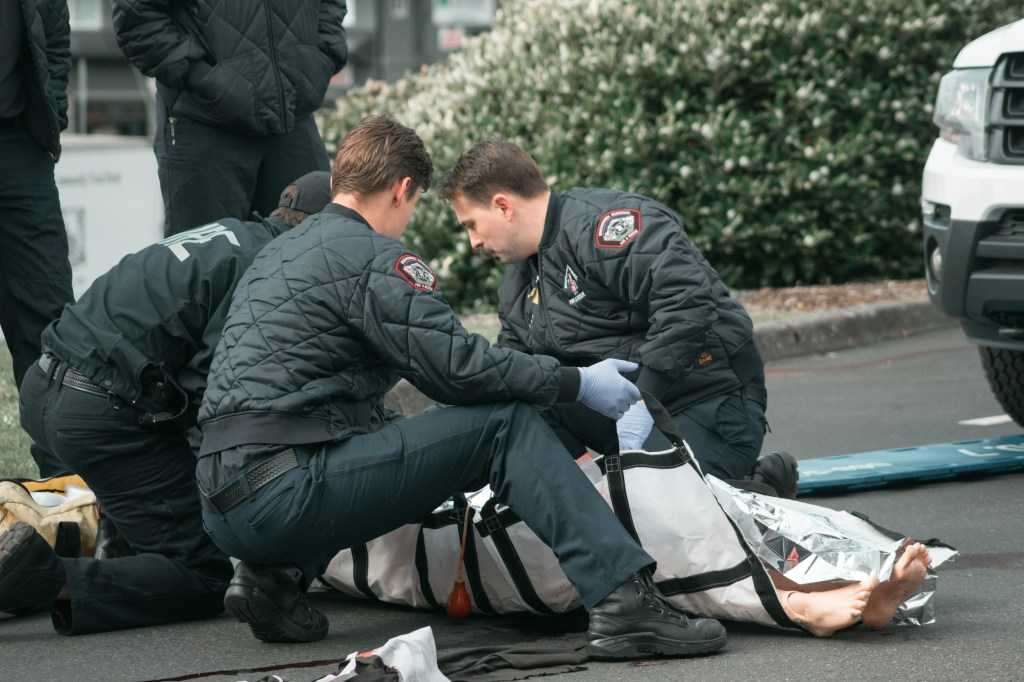
- Fire Medic: A traditional path for paramedics. They are paid higher than just medics or hospital medics. They are specialized worker and it makes for an exciting career. (I’m a fire medic so maybe I’m biased a little bit.)
- Tactical Medicine: Paramedics trained in tactical medicine work in high-risk environments. They can operate in law enforcement or military operations. Specifically you can look into SWAT Medics.
- Disaster Response Paramedics: These paramedics specialize in providing medical care during large-scale disasters.
- Event Medicine: Paramedics in this field provide medical coverage at events, such as concerts, sporting events, and conventions. Not as many exciting calls but you can go to some cool venues.
- Air Medical Transport: These paramedics work on helicopters or airplanes. They transport critically ill or injured patients to specialized medical facilities. Not for me, helicopters are scary.
- Search and Rescue: Paramedics involved in search and rescue operations provide medical care to individuals who are lost or injured. You get the chance to work in remote and challenging environments.
No matter what track you follow, getting your national certification is the first step.

Be An EMT-Basic
That’s an easy first step. You’ve probably already done it if you’re reading this.
But it is a requirement for becoming a paramedic student. Everything you learn as a medic will build off your knowledge as an EMT.
Though there is no stipulation on how long you need to be an EMT-B before becoming a paramedic. I highly recommend spending at least two years working as an EMT before moving up.
That time and experience will be invaluable as a paramedic.
Paramedics save lives. EMTs save paramedics. A good EMT makes a good paramedic.
Find Accredited Classes
Once you are an EMT- hopefully with some experience- you need to find a paramedic class to take.
There are tons of them around. Many are put on by local community colleges. If your lucky, the department you worked as an EMT at will pay you to become a medic student.
Most classes will run 1,200 – 1500 hours over 10 – 12 months.
Some even get you all the way to an associates degree. The state gets to decide what the exact requirements are.
I can’t go over them all here so make sure you know yours. If you want to search for accredited colleges near you, check out the CAAHEP.
Comision on Accreditation of Allied Health Education Programs. Super long name I know. But you can filter by location and profession. You’ll find any programs you need to advance your career.
Become a Good Student
No joke, these classes are a lot of work.
The material isn’t much harder than EMT, but the program lasts longer. It’s hard to keep a consistent study schedule for that long.

If you want some good advice on how to survive medic school, here’s my Paramedic Class Survival Guide.
TLDR: Stick to a schedule. Know when you’re going to study and do nothing else.
Paramedic class isn’t the time to get your six pack back or go traveling the world. It’s the time to set yourself up for the rest of your career.
Sit down and buckle up. You absolutely must pass this class.
Pass The NREMT
Just because you passed the class doesn’t mean you can go around handing out drugs. You’re basically still a paramedic student.
All you’ve done was get some college credits. You still need to pass the National Registry. It’s EMT-B all over again.
Thankfully the test will feel very similar. The questions are weird, you know that. But if you passed them once you can pass them again.
Your program will have given you everything you need to ace the NREMT.
There are plenty of resources for extra study if you’re worried. You can check out our full resource list here.
But if you still want a little more help, check out Pocket Prep.
It’s been one of my favorite study apps. So good we actually include it with all our Paramedic and EMT classes for all students.
I’ve seen dozens of EMT and Paramedic students use Pocket Prep as their only study guide and pass the NREMT first try.
So if you want to check them out – and help support the blog- try using this link here.
It costs you nothing extra, but we get a little commission from them and everything helps. Plus they have an amazing pass rate.
Oh, and they’ll let you use it for free on the off chance you do need to retake the NREMT.

State Licensure
Finally, you’re almost a real paramedic!
I can’t think of a single state that ONLY requires a National certification.
States want you to get your state license as well. And they wont give that to you without the National one.
Annoying, I know.

Thankfully, getting your state license is super easy after you have your National Certification.
For example in Arizona, if you can show the state you have your National cert, they basically just mail you the state license.
If that’s not a good enough reason to keep your national cert then I don’t know what is.
So, there you have it.
Five quick steps to get you from your EMT-B to EMT-Paramedic.
- Be an EMT
- Find an Accredited Course
- Pass the class
- Pass the NREMT
- State Licensure
On paper it doesn’t look too hard. Ask anyone who’s done it and they will tell you how much work it required.
However, I believe anyone can do it if they are willing to put some time into it.
I always tell prospective medics, “Think of the absolute worst medic you know. If they can pass, you can pass.”
Thanks for reading through to the end. If you want to read more you can find all our blog posts HERE

 The Medic Mentor
Leave a comment