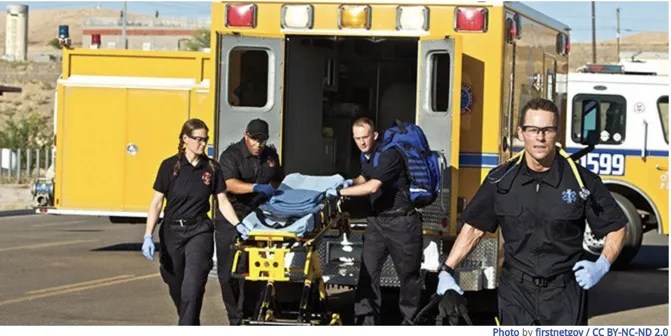
Licensed Paramedic? Certified Paramedic?
In this article we talk about the difference between certification and licensure for paramedics.
If you’re here, I’m assuming you’re a newer paramedic. Or maybe you’re an EMT-B about to start their paramedic training.
And you’re wondering, is there a difference between a license and a certification?
There is in fact. And it’s pretty important for your ability to work as a paramedic.
I’ll cover what all those differences are in just a moment.
But if you’re new here, I’m Shay. I’m a fire medic and have been working in pre-hospital EMS for over a decade now.
And at the end, I’ll cover a few other certifications you can get to advance your career as a paramedic.
Let’s get started.
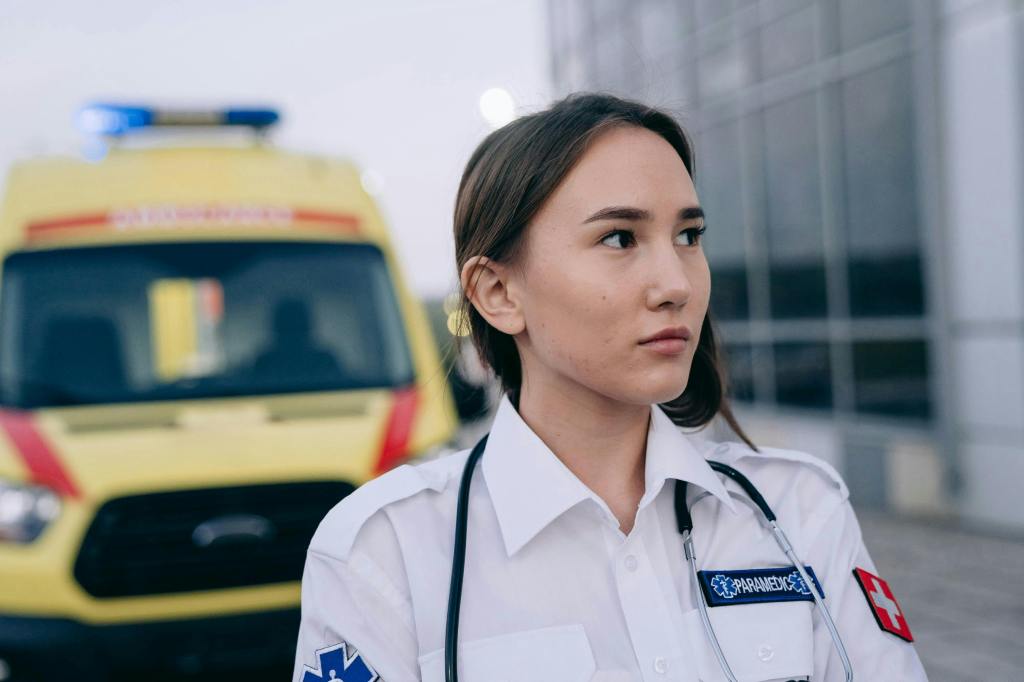
LICENSE AND CERTIFICATION DIFFERENCES
In short, a license is a legal document.
It’s issued by some government agency and gives you the authority to work in your profession.
For us, that’s a paramedic.
You could have all the training in the world, if you don’t have a license to work, you’re working illegally.
Certifications are just proof of training.
They basically just tell everyone else you completed a course.
They are only offered through non-government agencies. This means any organization can make their own certifications. It also means you aren’t legally required to follow them.
Your work can still make you comply with them.
Certifications from big organizations hold more weight. Think the AHA.
Or another good example is drivers licenses and CDLs.
Pretty much everyone gets a drivers license at 16. These are issued by the DMV- a government agency.
Boom, you’re legally allowed to drive a car.
Commercial Drivers Licenses (CDLs) are certifications. They are some additional training provided by companies. You may need them for specific work, but they mean nothing if you don’t have an actual drivers license.
Hope that makes sense so far.
OTHER CERTIFICATIONS FOR PARAMEDIC
To get your paramedic license you only really need a few things.
You need to complete an accredited course. Pass your NREMT Exam. And get your state license.
But many places require additional certifications.
Here are three of the most common
- PALS
- ACLS
- PHTLS

PALS
Pediatric Advanced Life Support.
We all know pediatrics are some of the worst calls.
Unfortunately we don’t spend enough time studying the differences between different age groups.
PALS is a short course focusing on pediatric care.
There’s nothing extremely new about the information. Much of it is in your textbook. But it gives us the opportunity to really focus in on this demographic
ACLS
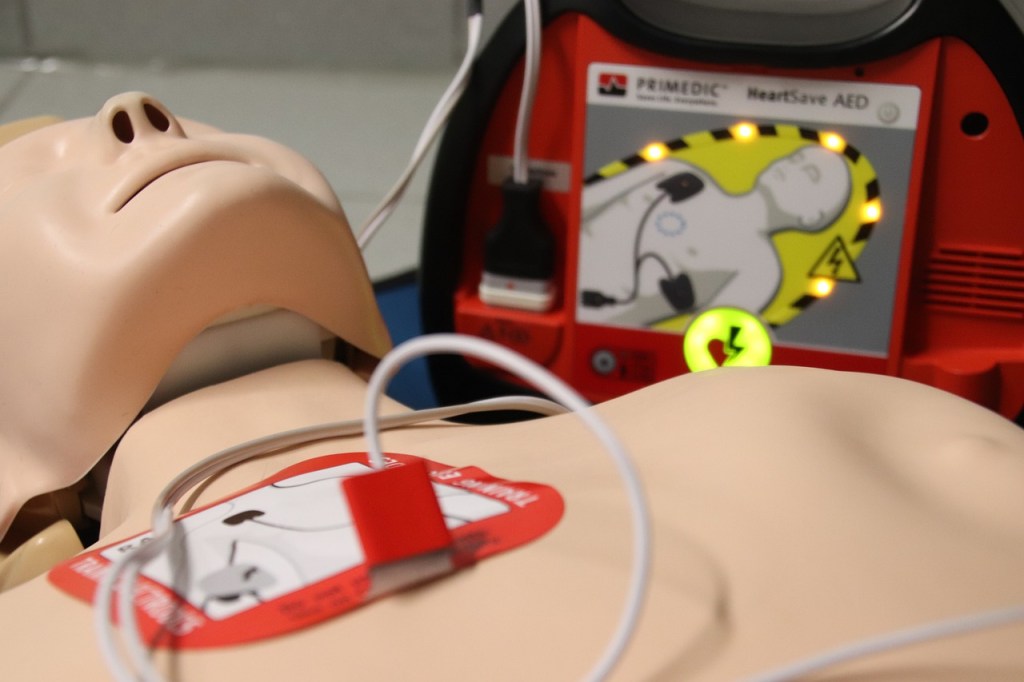
Advanced Cardiac Life Support.
This is additional training in resuscitative efforts in cardiac arrest patients.
It also touches on other cardiac issues like symptomatic bradycardia.
It’s a great class to take. Some courses require it to graduate.
However, some of the information is a little outdated. At least in my opinion. My department no longer requires this particular certification.
PHTLS
Pre-Hospital Trauma Life Support
We all love a good trauma.
Car accidents, shootings, the good stuff.
PHTLS is a focused course on managing these chaotic scenes.
They go more in depth on the pathology of shock and blood loss. And covers more bleeding management and fluid resuscitation techniques.
It’s another great course often required by departments.
Remember, you can get all these certifications, but you don’t have the right to work as a medic without the license.

OPTIONAL CERTIFICATIONS
There are some certifications you can only get after you have your license.
These give you opportunities to move to different positions or change jobs entirely.
The most common are
- FP-C
- CCP-C
- TP-C
Flight Paramedic
Your flight paramedic certification (FP-C) lets you start working as a flight medic.
You’ll be working on helicopters rather than an ambulance.
It’s an awesome position. You get to work with a flight nurse rather than an EMT or other paramedic.
You skip on the midnight transports for Bob the corner homeless guy because he’s hungry. Again. All your transports are for actually critically ill and injured people.
You know, what most of us signed up for.
And flight medics make more than most ambulance paramedics.
It’s issued by the Board for Critical Care Transport Paramedic Certifications (BCCTPC).
That’s an unnecessarily long acronym.

CCP-C
Critical Care Paramedic.
Typically you will also need this as a flight medic. But it can be a stand alone certification too.
This certification focuses on airway management and lab values.
With this you’ll be able to use a ventilator during transport and interpret blood labs. This is mostly for interfacility transports of critical patients.
Tac Med
Tactical Paramedicine. TP-C
These guys are the shit. Excuse my French.
Often they work with law enforcement to act as front line medical providers.
They aren’t standing back, waiting for patients to be brought or them.
They are in the hot zone. Many are armed.
You’ll hear a lot of these called Swat medics. They are part of regional swat teams. This isn’t normally a full time position and many paramedics do it as a side gig.
It requires more days of training every month.
And you always have to be ready. SWAT medics aren’t typically hanging out at a station waiting. They get calls off duty and have to respond.
It can be an awesome job. Just be prepared for the time required for it.

ALL IN ALL
Let’s recap. Your license is what gives you the right to legally work as a paramedic.
Your certifications simply say you’ve competed a training.
There are a ton of certifications you can get as a paramedic.
These barely scratch the surface.
So keep your eyes open and collect all the different certifications you can.
You’ll have a lot more opportunities that way.
And if you want any help studying for those classes, check out some of my study tips here.
And if you already know you want to become a paramedic check out the Pocket Prep app. It’s been the best study app I’ve found for passing the NREMT.
Seriously, give it a try. You won’t be disappointed.

Good luck!

 The Medic Mentor
Leave a comment