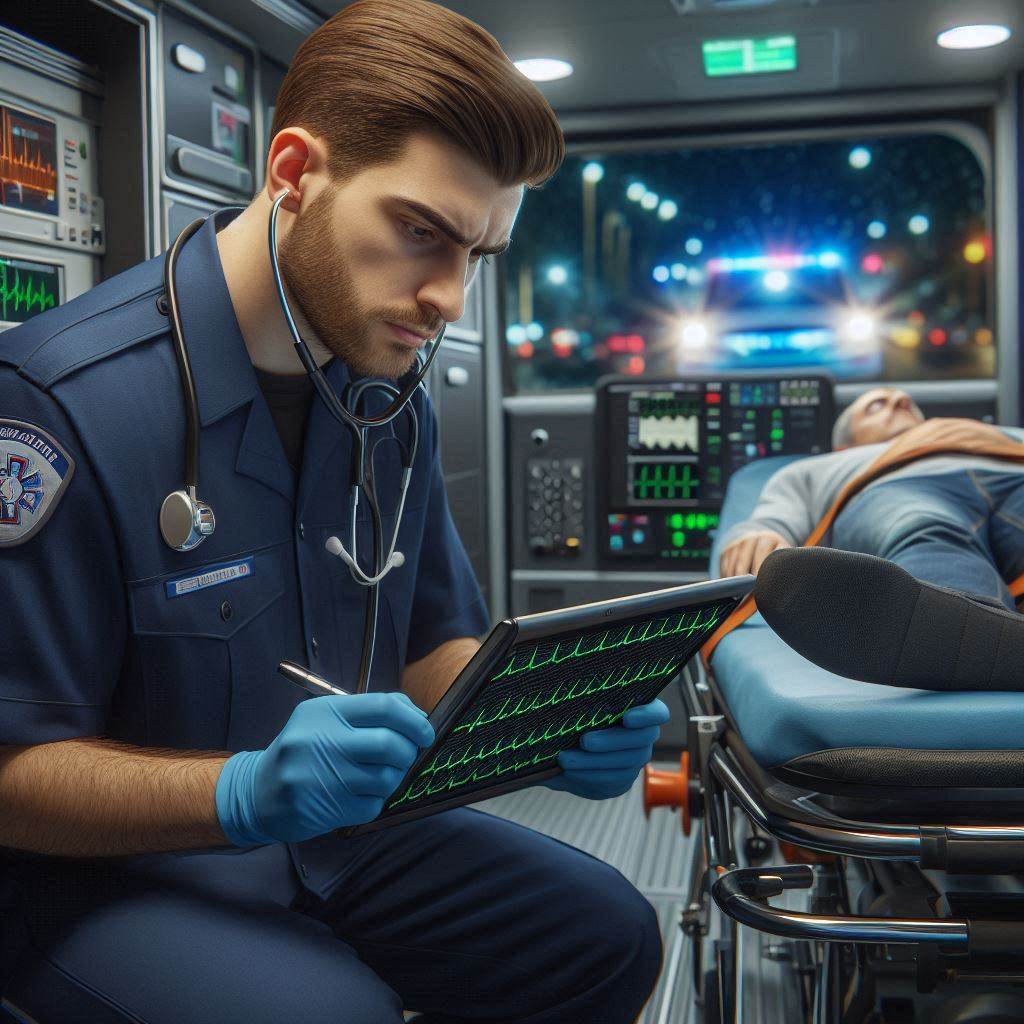
The best way to start learning anything is with the basics, and it doesn’t get any more basic than vocab.
Today I’m going to give you one of my biggest secrets to making medic class easy. Its better than any Quizlet you’ll find, less expensive than any other course or supplemental study guide. In fact you already have it. They literally GAVE it to you in your class. It’s your glossary.
And the only things you’ll need for this is a highlighter, preferably yellow, and a stimulant of choice. Coffee, nicotine, adderall…dealer’s choice.
Think about it, if you were learning a new language one of the first things you would do is study up on the most used words. You might even learn a few useful sentences like “where’s the bathroom?” But then we start medic class and we spend such little time learning the language. You can’t just start off explaining what Atrial Fibrillation with Rapid Ventricular Response is if you don’t know what half those words mean. You can’t learn the material if you don’t speak the language.
So today’s going to be all about how to get the most out of your paramedic text book and get an immediate leg up on the rest of your class. Doesn’t matter when you’re taking the class, what version of the book you use, or how crappy your instructor is, this will help. Or at the very least its the first thing I did for every chapter and it helped a ton.
You need to build a scaffold for everything else you learn in class to rest on. The most basic scaffolding are the keywords in your book. Honestly they are the only important part of the book. All the other words are just there to connect definitions of one vocab word to the next.
Of course your paramedic instructors would never admit this. They want you to think every single word in that textbook is gospel. It isn’t. You can break this book down piece by piece and make it your bitch. Don’t listen to your medic instructors, they’re just reading their Power Points. Oh and don’t get me started on cookbook medics. We don’t have time for that rant today.
Step one of dominating your medic course is to start early. Like I said I’m giving all the secrets away. If you get your book early start studying every keyword you can find in the book before your first day of class. There are a ton of different memory techniques to try out that will make learning all these medical terms cake to remember.
If you can’t get your book weeks or even days early, you need to make sure you’re showing up to class prepared. I believe most of your learning takes place at home. Medic class is for questions, skills, and story time. Kinda like kindergarten. Know what chapters are on what days. If tomorrow’s class is on trauma you better make sure you’ve opened up your book and studied your medical terminology before hand.
Because when you show up to class with a solid base of the language you are about to use, everything your instructor will make so much more sense. You won’t be spending all this time working backwards trying to remember what the heck the greater trochanter is (its the bony protrusion of your hip if you didn’t know).
Now you spend your class digesting how the body works, how your medications work, and you can speak intelligibly with your instructor about the material. If nothing else your instructor will appreciate you using the proper words. They play favorites everyone knows that. Try to make sure it’s you.
If you really want to make sure you’re teachers pet, memorize your keywords and skim the text to find each time they’re used. No you don’t have to read the whole chapter, nerd. Just quick skim through and highlight each medical term and keyword with your yellow highlighter.
You probably think that’s a waste of time but even on that super quick skim your brain is picking up little bits of surrounding information. It’s getting filed away into the back of your brain behind all the alcoholism memes.
But that’s good. Your brain does some of its best work in the background. You want that scaffold there so your brain can start connecting the dots and getting a more complete understanding of what the book is saying. Even if you retain next to nothing, you’re still a thousand times better off than you were before you opened your book.
I promise you this works. Just give it a try. Before your next day of class open up your book, study your medical terminology, highlight it, and see how much more you get out of your medic instructor’s lesson.
And If you’re really struggling, check out Pocket Prep. It’s something we offer all our students as part of their class.
Every year we hear from our student’s how useful the app was. They can keep it in their pocket and do bite sized chunks of studying on the go.
And if you want more information on Pocket Prep or their study guides, please use my affiliate link here. It really helps me to keep writing more articles like this.
Knowing your terms also lets you break down the information during a test or even during class. You may not actually remember what the SA node is but you can figure it out with some quick vocab work. Watch.
The SA node is the Sinoatrial node. But does it come before or after the AV (Atrioventricular node)? Well, what’s a normal sinus rhythm? It’s what we expect to see on an EKG where the heart’s pacemaker cell is firing normally. We also know the atria are the top chambers of the heart so we can pretty confidently guess our SA node is at the very top of the heart. But to put the nail in that coffin we could expect the lower node to probably lie between the atria and the ventricles. Oh yeah, AV node definitely comes second.
And there’s an infinite number of examples we could logic our way through to figure out anatomy, physiology, and pharmaceutical interactions with just based on vocab.
Still not convinced your glossary is the most important part of your paramedic text book? Think of it as your Oh shit panic button when you forgot to study for your chapter exam…again.
It’s better than going over 400 practice NREMT questions. It’s more effective than reading random paragraphs to try and cram some last second information into your head. Spending the 20 minutes before your test really diving into your terminology will give you the best bang for your buck on studying. Like we just talked about, if you know your terminology on the test you can pretty confidently reason your way through a lot of questions.
Or go with the standby of BSI, Scene Safety. Works 90% of the time, every time.
But seriously give it a go. Before your next class study that chapters keywords and terminology. Then, right before that test, go back through and review the vocab. It won’t eat much time out of your day and will probably make everything else you do to study more effective.
But that all I have for today. If you do try this out let me know how it goes in the comments. Like I said it’s something I did for every chapter and it made my studying a lot easier. It’s also what I do now to help prep before I teach paramedic or EMT classes. Its a study tool that never gets old.
Good luck out there!
And if you want to know more about what we do you can find us HERE

 The Medic Mentor
Leave a reply to 25% of EMTs Fail Paramedic School- Here’s How To Make Sure You’re Not One Of Them – The Medic Mentor Cancel reply