This article covers signs and symptoms of posterior heart attacks and how to run a posterior 12 lead to catch them
Posterior MI ECG Criteria
In the US there are over 800,000 heart attacks each year.
160,000 of those are posterior STEMI’s.
100’s of heart attacks get missed by paramedics in the field. Many of those are posterior.
These are commonly missed by EMS providers. Not because they’re particularly difficult, we’ve just never been taught well.
But you can’t let that be an excuse. Posterior MI’s are actually pretty easy to read. We just have to know what we’re looking for.
And if it’s your first time here, hey, I’m Shay. I’ve been working in pre-hospital EMS for over a decade now. I’ve also taught several paramedic and EMT courses.
Today I’m going to cover everything you need to diagnose a posterior MI in the field.
Here’s what we’ll go over.
- ST Segment Changes
- Patient Symptoms
- How to Run a Poster 12-Lead ECG
Let’s get started.

ST Segment Changes
These are the biggest give away in a posterior MI. That’s why this section is the most important to learn.
Your first step is to run your normal 12-lead ECG. Like any STEMI, you wont be able to see everything you need from a 3-lead.
A good rule of thumb is if you think “should I run a 12-lead?” Just run it. It never hurts to see what’s going on with the patient’s pump.
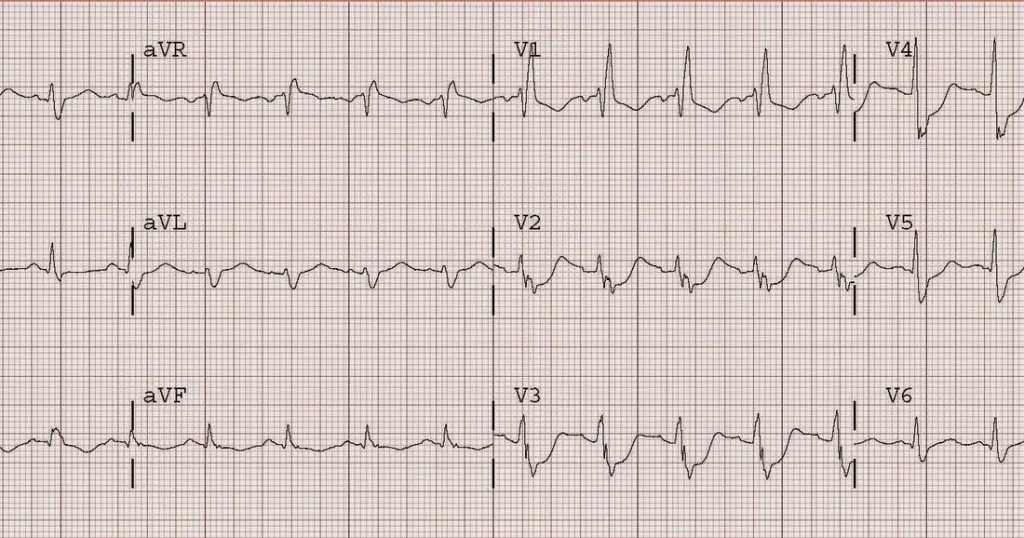
In the 12-lead you want to look for changes in V1-V4.
Remember, these are your anterior leads. That means they are showing you what goes on in the front portion of the patient’s heart.
You should be seeing ST segment depression in those leads.
But wait, I thought we were looking for the back of the patient’s heart.
Right. This is called reciprocal changes.
With these reciprocal changes, if we see depression in the front we should see elevation in the back.
It’s like a cardiac mullet. All business upfront and party in the back.
A second finding you want to look for in your 12-lead is ST segment elevation in AVr. This shows more of the right lateral side of the hear.
This elevation doesn’t show up in every posterior MI.
But due to how the heart is rotated, you’ll often be able to see some elevation in AVr. It’s sort of showing you a view of the lateral portion of the heart as it wraps around to the back.
This ST segment depression in V1-V4 is what throws paramedics off. They see the depression and think ischemia.
And they aren’t wrong. That is what ST depression is caused by a lot of the time.
It doesn’t scream STEMI.
They think they can fix it was O2 and fluids. What that patient really needs is Aspirin and a Cath Lab.
So if you start seeing anterior lead depression, be a little more suspicious of what’s really going on with your patient.

Patient Symptoms
So what are the actual symptoms of a posterior MI?
Are they any different from a STEMI? What about angina?
You’re going to hate this. No, they aren’t.
There are no posterior specific symptoms to look for in patients. The biggest give away is the 12-lead changes we talked about before.
But let’s go over some of the catch-all symptoms of a heart attack. Just in case you forgot what they are.
Pale, cool, diaphoretic. If you’ve seen a patient having a legit STEMI before, you know what I mean.
These patients look freaking sick. You don’t have to do much detective work to realize they aren’t doing well.
You can also look for lightheadedness and shortness of breath. These findings aren’t present in every case, but they’re good to look out for.
And of course, chest pain.
I’ve heard before that people will complain of more back pain with a posterior MI. I have never found that to be true. I’ve also yet to find any data that supports that. As far as I can tell, no matter where the STEMI is, the pain is the same.

Atypical Symptoms
Different demographics tend to present differently with heart attacks. Specifically women and diabetics.
These patient populations are more likely to report feelings of fatigue and nausea. Without the typical complaint of chest pain, these patients don’t get diagnosed as often in the field.
It’s super important that you start doing more 12-leads on calls.
Especially with nausea and upper back pain as the only symptoms.
Missing these symptoms often leads to lack of diagnosis and patient having a “silent” heart attack.
These are rarely truly silent. The symptoms are just misdiagnosed as something else. Generic back pain or indigestion are pretty common ones.

Posterior 12-Lead
Ok, we know what to look for. We did our 12-lead and found our patient has ST depression in V1 and V2.
It’s time to really hone in on that Posterior STEMI.
And they are pretty easy to do. Most people just don’t remember how to do them. Or they were never shown how to in the first place.
You just need 3 leads to be moved to the back and viola, you have a posterior 12-lead ECG.
Take you last three precordial leads, V4, V5, and V6, off your patient.
V4 becomes V7. It gets moved directly under the axillary line.
V5 becomes V8. It goes to the bottom tip of the left scapula.
V6 becomes V9. It basically falls between V8 and the spine.
See that’s not too hard. Just requires a little practice.
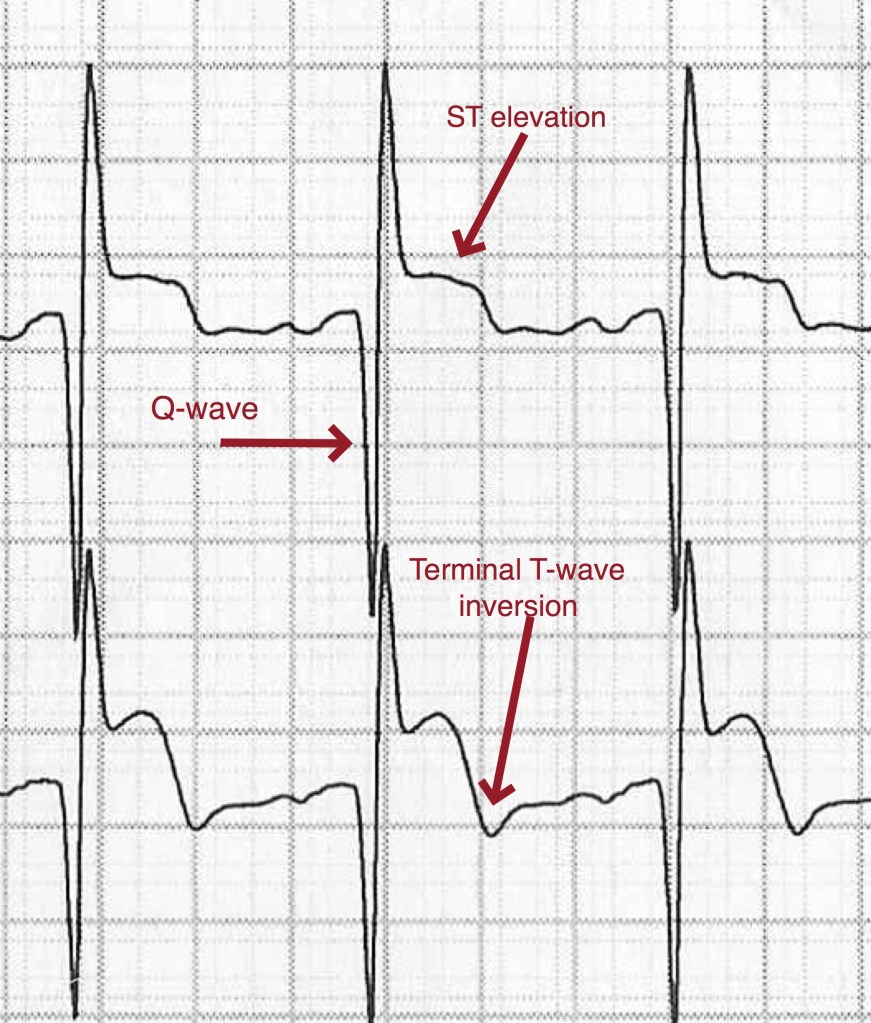
And if your patient is actually having a posterior MI, you should start seeing ST segment elevation in your V7, V8, and V9 leads.
One caveat to this. If your department is super fancy you may have a cardiac monitor that can do a 15-lead. In this case you don’t need to move anything. Your ECG will be able to show you all the posterior angles without changes to your 12.
But not many places are able to run 15-leads. At least not yet. I believe one day it will be common place.
So if your department can, enjoy it. You’re just ahead of the curve.
You also probably shouldn’t be reading this article since all your ECG have posterior readings.
Posterior Wrap Up
There we have it.
These are still going to be the most commonly missed STEMI’s. Now we know they aren’t that hard to see, we just have to be looking for them.
And yes, your crew might look at you a little funny the first time you run a posterior ECG. But if you’re lucky you’ll get to show off your sick paramedic skills by catching this elusive STEMI.
And if you want more information on Posterior MI’s check out this article here.
Good luck out there!


Leave a comment